



Get In Touch
Serving Denver, CO & Surrounding Areas
Call Now for a Free Consultation!
303-990-3676
Email Us
info@frontierdesignremodeling.com
Planning a home renovation often begins with one major question: how much should you realistically invest in improving your home without overspending or under-improving it?
One commonly used guideline in the remodeling industry is the 10% rule for home renovations. While it is not a strict formula, it provides a practical way to think about renovation spending in relation to your home’s overall value, condition, and long-term goals.
This concept helps homeowners avoid emotional overspending, prioritize meaningful upgrades, and align renovation decisions with real-world market expectations.
The 10% rule suggests that homeowners often consider spending around 10% of their home’s current value on significant renovation projects.
The purpose of this guideline is not to limit creativity or set a fixed cap. Instead, it serves as a planning reference point that helps homeowners stay balanced when deciding the scope of their remodel.
It is especially useful for:
By relating renovation decisions to home value, homeowners can better understand scale and proportionality.
The 10% rule developed from real-world construction and real estate patterns rather than a formal regulation. It reflects how renovation costs and property values tend to interact in most housing markets.
There are several reasons this guideline is widely used.
Every home has a “natural ceiling” in terms of market value based on location, size, and neighborhood standards.
The 10% rule helps ensure that renovation decisions remain proportionate to the home’s overall standing in the market. Without this reference point, homeowners may unintentionally over-invest in features that exceed local expectations.
Over-improving a home happens when upgrades go significantly beyond what similar homes in the area offer. This can lead to:
The 10% rule helps reduce this risk by encouraging balanced investment decisions.
On the other hand, spending too little can leave a home feeling outdated or incomplete. Under-investment may result in:
The 10% guideline encourages homeowners to invest enough to meaningfully improve their space.
The 10% rule is most commonly applied to mid-to-large scale projects, especially those that significantly impact the home’s layout or daily use.
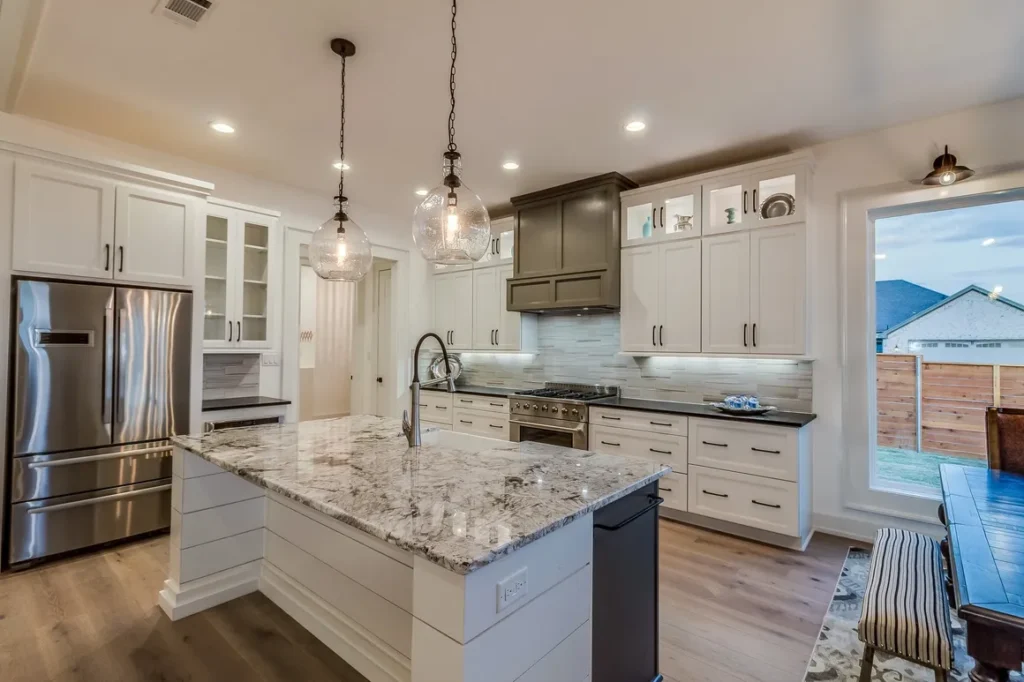
The kitchen is one of the most important areas in a home, both functionally and in terms of resale appeal.
Renovation work may include:
Because kitchens are high-impact spaces, they often represent a major portion of renovation planning.
Bathrooms are smaller spaces, but they have a strong influence on comfort and home value.
Common updates include:
Even modest bathroom improvements can significantly change the feel of a home.
Basements offer one of the best opportunities to add usable living space.
A finished basement can serve as:
This type of renovation often transforms unused square footage into functional living space.
Some homes require broader updates that affect multiple areas at once.
These projects may involve:
Whole-home renovations typically require more planning and coordination but can dramatically improve overall livability.
Even when using the 10% rule as a guide, actual renovation costs depend on several important factors.
Materials significantly influence both appearance and durability. Options vary widely:
Each choice affects overall project scope and longevity.
Skilled labor is one of the most important components of any renovation. Experienced professionals contribute:
Quality workmanship often has a lasting impact on how well a renovation performs over time.
Projects that involve structural changes tend to be more complex, such as:
These elements increase planning requirements and construction time.
Older homes often require additional updates behind the scenes, including:
These hidden factors can significantly influence renovation scope.
Successful renovation projects begin with careful planning, not just financial estimates.
A smart planning process includes:
Planning helps ensure that decisions are intentional rather than reactive.
Renovations are not just financial decisions—they are also emotional investments. Homeowners often want to:
However, practical considerations such as durability, functionality, and long-term usability are equally important.
The 10% rule helps bridge emotional desires with practical decision-making by providing a grounded reference point.
Without a structured approach, homeowners often face challenges such as:
Adding new features during construction can quickly increase complexity.
Focusing only on appearance may overlook long-term usability.
Older homes often reveal unexpected repairs once work begins.
Inconsistent material selection can lead to design imbalance and higher costs.
The 10% rule for home renovations is not a strict requirement but a practical guideline that helps homeowners approach remodeling with clarity and balance.
By considering your home’s value, project scope, and long-term goals, you can make smarter decisions that improve both livability and overall property performance.
A well-planned renovation is not about spending more—it is about spending wisely, with purpose and direction.
303-990-3676
info@frontierdesignremodeling.com